

01—
Coconut oil
About a year ago, coconut water started flying off the shelves. At Huckleberry Farms (where I work part-time as their Naturopath) people began buying cans of coconut water by the armful! Why this sudden desire for ‘the water of the coconut’?
I would say it was due to a combination of marketing and the convenient new packaging. It now came in a can or Tetra Pak, and therefore didn’t require a machete to open… Thankfully things have settled down now. However, we still get people trickling in for this beverage. They are confused as to how and why they should be using coconut water.
Firstly, let’s get something straight, you don’t really need it. And secondly, in no way does it help with weight-loss.
Please refer to my previous coconut article to find out how coconut fat can be used (with caution) for weight loss.
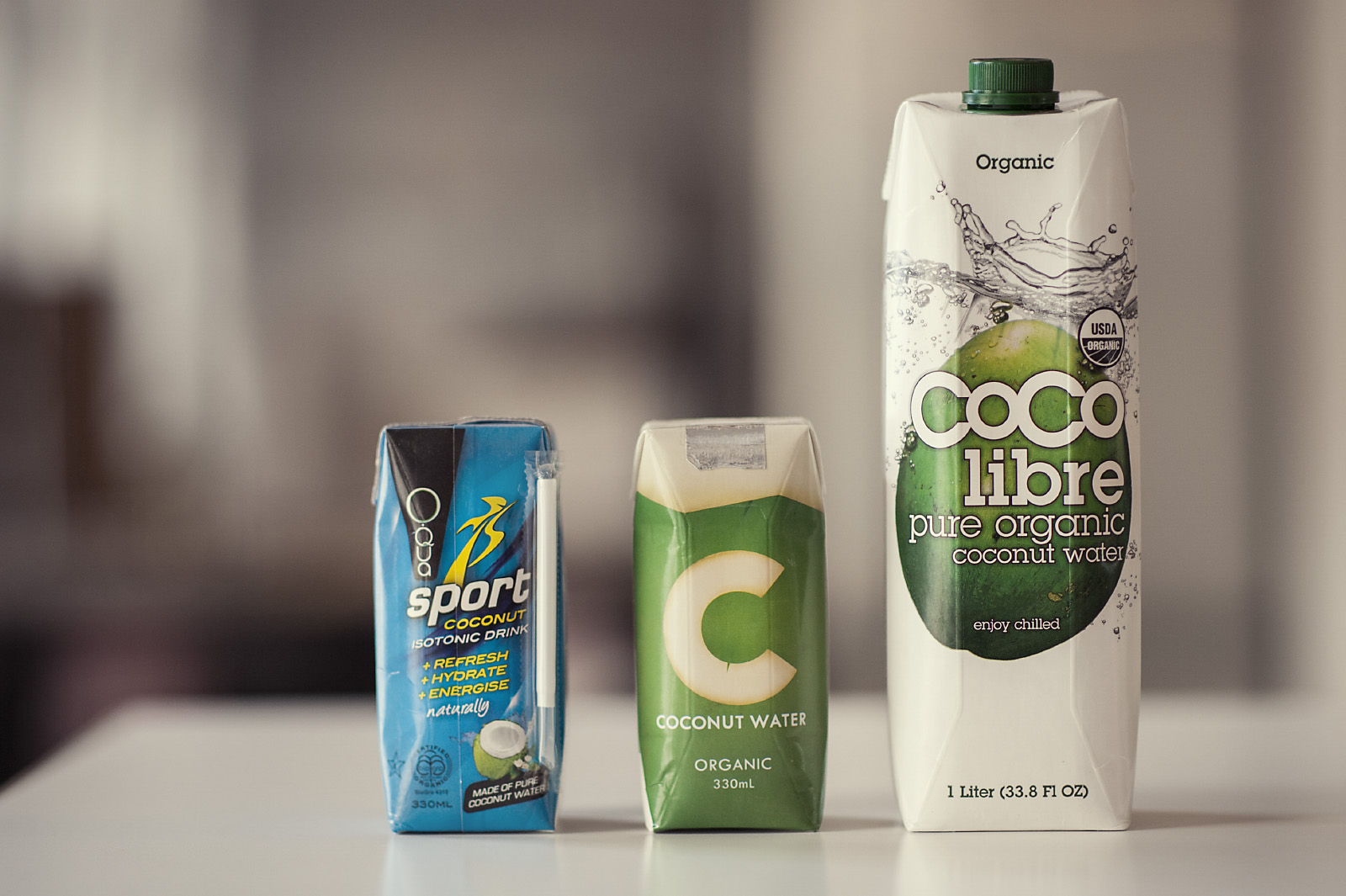
To me, it makes no sense to regularly consume coconut water (if at all) unless you live in ‘the tropics’. Coconut water is suited to the metabolic demands of people that live in (and who actually come from) hot/humid conditions.
Note: Perhaps a glass of refreshing coconut water would be warranted (for someone living outside of the tropics), if they had gone to the trouble of cracking open their own coconut!
Coconut water is reported to hydrate1 the body, and replenish vital nutrients (potassium, sodium, calcium, magnesium, and phosphorus). These health promoting properties are only accredited to coconut water that comes from young green coconuts… not from cans or tetra-paks. Fresh is definitely best.
No sugar added
it already contains enough sweetness
No artificial ingredients
it’s not processed like commercial sports drinks
Certified organic
it doesn’t have any nasty pesticides or insectides that have been inadvertently added
No preservatives
it’s been pasteurized due to it being highly perishable!
Not from concentrate
it uses juice straight from the coconut — which means minimal processing
Gluten Free
coconuts are not grains
No fat
it’s water…
Cholesterol Free
it’s water!
Coconut water contains the following substances:
Sugar
a Brazilian study2 concluded that the sugar in coconut water consisted of: glucose 50%, sucrose 35%, and fructose 15%
Electrolytes
potassium, sodium, calcium, magnesium, and phosphorus
Coconut water is also reported to contain antioxidants and cytokinins.
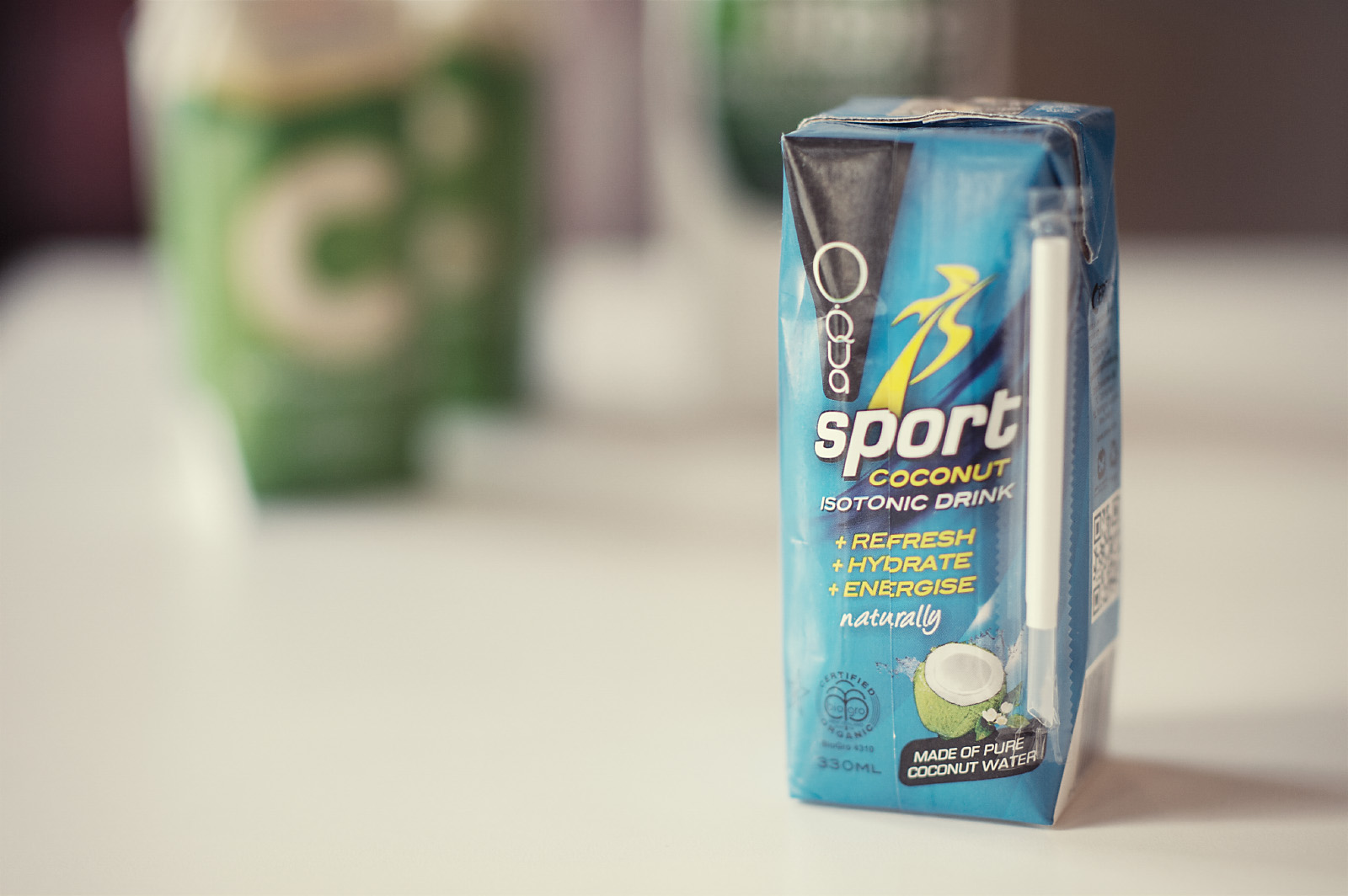
Oqua 330ml
(Marketed as, ‘Nature’s original isotonic drink’)
serving size — 330ml
sugar — 16.5g
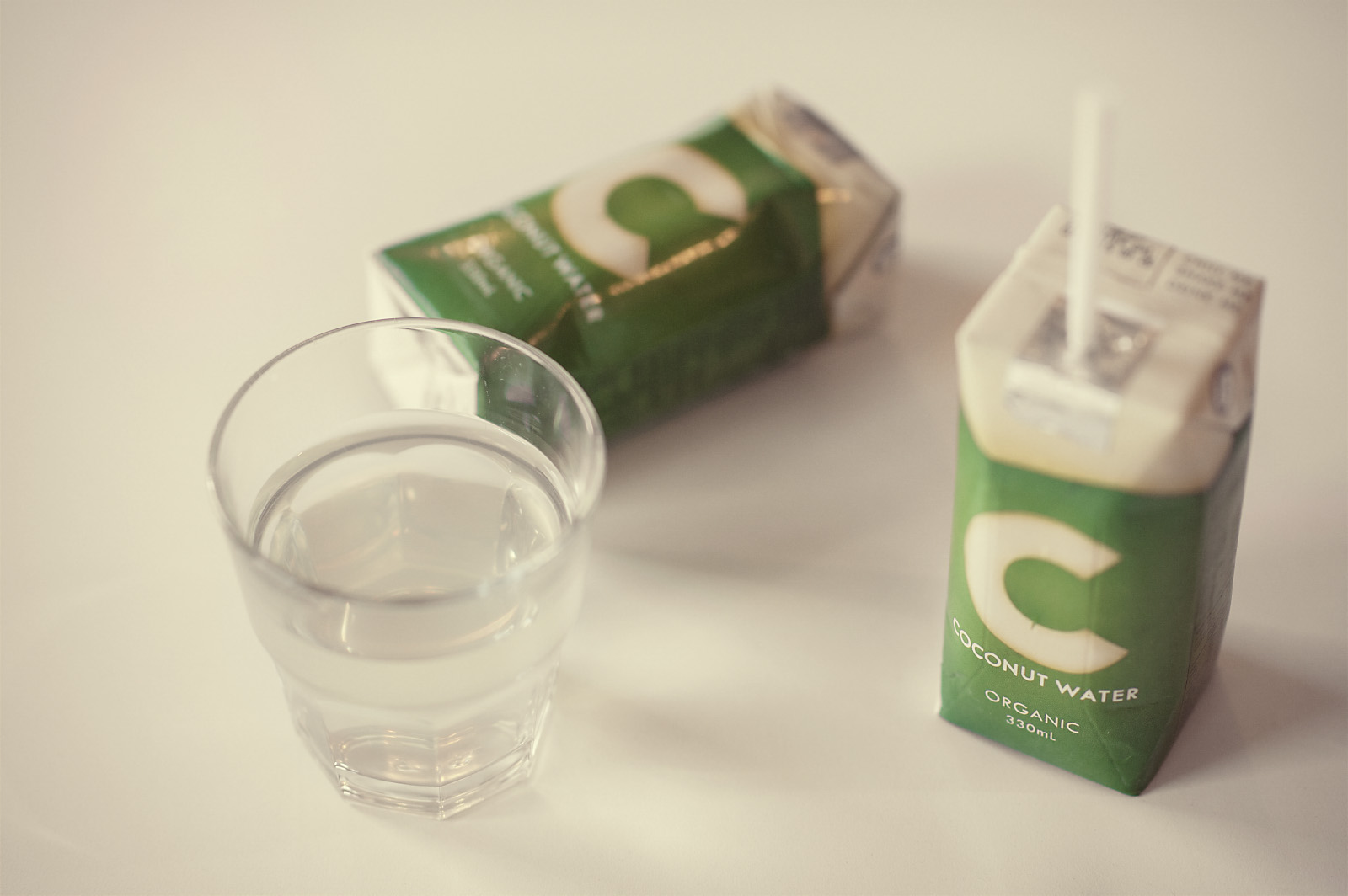
C Coconut water 330ml
Serving size — 330ml
sugar — 15g
Don’t let manufacturers packaging dictate what a serving size should be. In most cases, you would only need to consume 1/3 of this quantity.3
Note: Pure fruit juice contains anywhere from 9-12g of sugar per 100ml. Juice that contains added sugar will obviously contain more.
Unless you’re exercising intensely for over 60mins (and particularly if you are doing so in the heat) then simply drink plain ole’ watery water. This is sufficient to hydrate you.
You can get all your electrolytes, and carbs from a good diet prior to your mild-moderate exercise of a reasonable duration in length.
Note: this advice to drink coconut water only applies to recreational sports people. It doesn’t apply to actual athletes.
Use this product to prevent and treat dehydration due to diarrhoea and/or vomiting. You could use coconut water instead of pharmaceutical Electral/Gastrolyte, or processed Lucozade/Powerade for tummy bugs, food poisoning, travellers diarrhoea, viral enteritis or intestinal flu.
Note: you could also use it on long-haul flights, and for hangovers.
If you have a ‘cold’ (sugar is not good for your immune system), when trying to lose weight, or if you’re not expending a lot of energy (you have a sedentary job).
You certainly don’t need to use it in smoothies or juices that already contain sweetness in the form of fruit.
Lisa Fitzgibbon is a degree qualified (2006), experienced and registered Naturopath & Medical Herbalist. She runs her own private practice – OOMPH in Grey Lynn, Auckland, New Zealand.
Lisa has been involved in the Natural Health industry for 20+ years. She draws on her professional training and experience, as well as her own personal experience to bring you realistic, holistic health advice.
Book online
